
A solar eclipse will be visible across parts of the United States on Wednesday, August 12, 2026. However, viewers in the U.S. will see only a partial solar eclipse—not totality—while the path of totality crosses Greenland, Iceland, and Spain. For Hispanic communities in the United States planning to watch this astronomical event, Alaska and northern New England offer the strongest views. Here is where to look, what time to watch, and how much of the Sun will be covered in major U.S. cities.
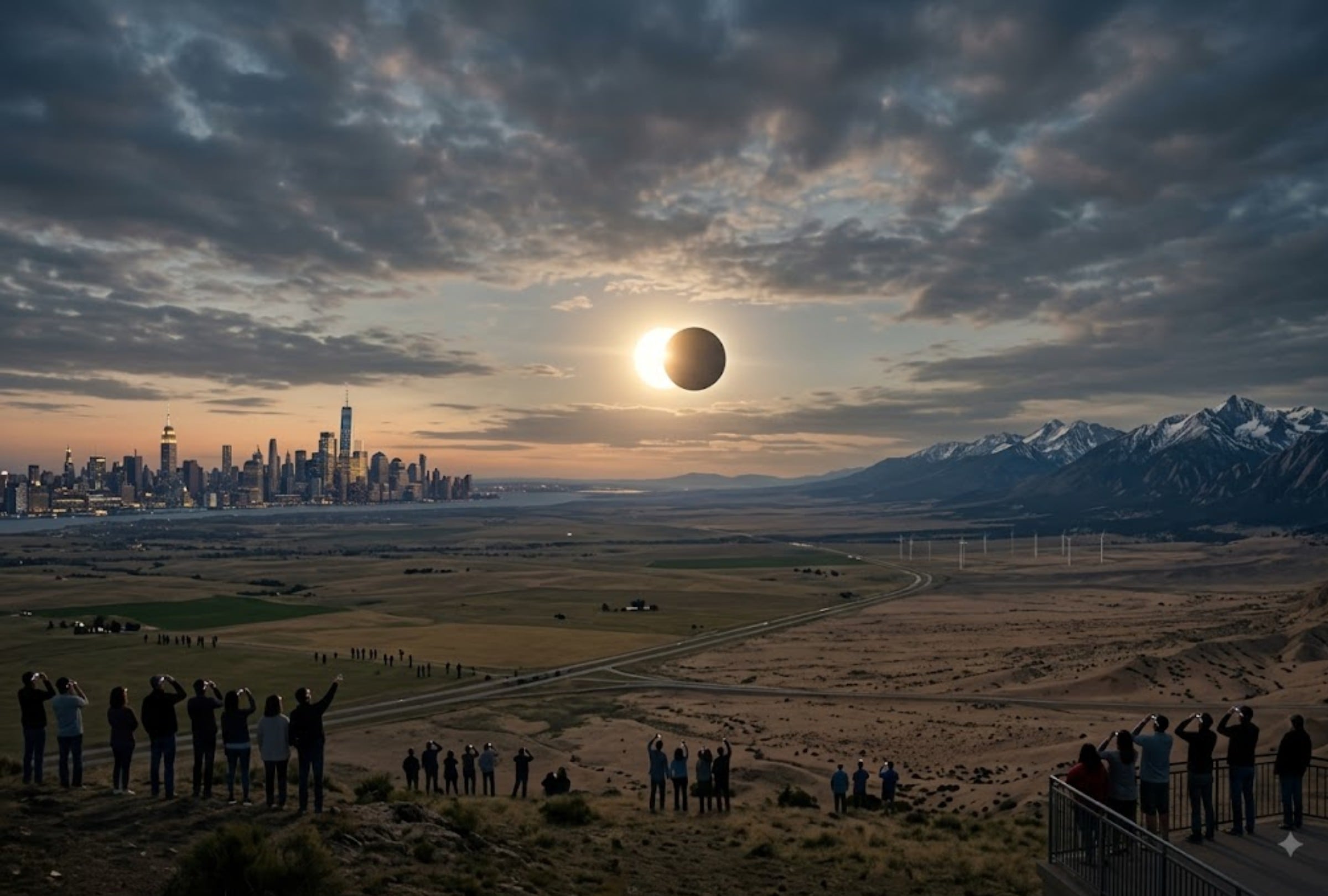
Find out what time the solar eclipse will be visible in the USA today, August 12, 2026, including the exact schedule, visibility by location, and where to watch the eclipse live online. | Image created by Gemini.
Will the August 12 Solar Eclipse Be Visible in the United States?
Yes. The August 12, 2026 eclipse will be partially visible from parts of the northern United States, stretching from Alaska through areas of the Northeast and as far south as North Carolina. The farther north you are, the greater the portion of the Sun that the Moon will cover.
It is important to set expectations: no state in the U.S. is within the path of totality. That means the Sun will not disappear completely anywhere in the country. The total eclipse will instead be visible in places such as Greenland, Iceland, Spain, and parts of northern Russia.
Best States to See the Solar Eclipse
Alaska: The Best Overall View in the U.S.
Alaska will offer the deepest partial eclipse in the United States, especially for viewers in Fairbanks and Anchorage. It is the top destination for people who want the most noticeable eclipse experience without traveling abroad.
| City | Maximum eclipse | Sun coverage | Best viewing time |
|---|---|---|---|
| Fairbanks, Alaska | Partial | 37% | 8:27 a.m. AKDT |
| Anchorage, Alaska | Partial | 28% | 8:21 a.m. AKDT |
| Juneau, Alaska | Partial | 17% | 8:24 a.m. AKDT |
Fairbanks is expected to have the strongest U.S. view, with about 37% of the Sun obscured at maximum eclipse. Anchorage follows with nearly 28% coverage, making it the best large U.S. city for eclipse viewing.
Maine: Best Option in the Contiguous United States
For those living in the Northeast or planning a short trip from cities with large Hispanic populations such as New York, Boston, or Philadelphia, Maine is the best choice in the contiguous U.S. Northern Maine will see the most substantial eclipse coverage outside Alaska.
| City | Maximum eclipse | Sun coverage | Best viewing time |
|---|---|---|---|
| Bangor, Maine | Partial | 24% | 1:53 p.m. EDT |
| Portland, Maine | Partial | 19% | 1:53 p.m. EDT |
| Augusta, Maine | Partial | 21% | 1:53 p.m. EDT |
Bangor will see approximately 24% of the Sun covered, while Portland will reach about 19%. These areas are among the best accessible viewing locations for families and travelers in New England.
Massachusetts and the Northeast
Boston will experience a partial eclipse with approximately 16% coverage at its maximum. While the effect will be less dramatic than in Alaska or Maine, it should still be visible to prepared observers using certified solar eclipse glasses.
New York City, Philadelphia, and Washington, D.C. will also see the eclipse, though coverage will be modest. These cities are good options for people who want to observe locally rather than travel.
| City | Maximum eclipse | Sun coverage | Best viewing time |
|---|---|---|---|
| Boston, Massachusetts | Partial | 16% | 1:55 p.m. EDT |
| New York City, New York | Partial | 9% | 1:54 p.m. EDT |
| Philadelphia, Pennsylvania | Partial | 7% | 1:53 p.m. EDT |
| Washington, D.C. | Partial | 4% | 1:53 p.m. EDT |
What Time Is the Solar Eclipse in the U.S.?
The schedule depends on where you live. In Alaska, the eclipse happens in the morning; in Maine and the East Coast, it happens during the early afternoon.
Eclipse times by U.S. time zone
- Alaska: Around 8:21 a.m. in Anchorage and 8:27 a.m. in Fairbanks, both in AKDT.
- Eastern Time: Around 1:53–1:55 p.m. in Maine, Boston, New York City, Philadelphia, and Washington, D.C.
- Central Time: Visibility is very limited in places farther south and west. For example, Bismarck, North Dakota, is expected to see only 0.09% coverage around 11:57 a.m. CDT.
Because the eclipse unfolds over more than an hour in many locations, viewers should arrive early and check a local forecast before going outside.
Where to Watch the Solar Eclipse From the U.S.
The best viewing location is not only about eclipse coverage. Clear skies are equally important. For a stronger partial eclipse, prioritize:
- Fairbanks or Anchorage if you are in Alaska or can travel there.
- Northern and central Maine, including Bangor and Augusta.
- Portland, Maine, for a more accessible New England option.
- Boston, if you live in Massachusetts and want a local viewing plan.
For people in New York City, New Jersey, Pennsylvania, or the Washington, D.C. area, the eclipse will be visible but comparatively subtle. It may be worth watching from a park, rooftop, school activity, or local astronomy event—provided the sky is clear and you use proper eye protection.
How to Watch the Solar Eclipse Safely
Never look directly at the Sun without proper protection, even during a partial eclipse. Since no part of the U.S. will experience totality on August 12, viewers must wear certified eclipse glasses during the entire observation period.
Use glasses that meet the ISO 12312-2 safety standard, or use a solar filter designed for telescopes, binoculars, or cameras. Regular sunglasses, phone cameras without a solar filter, smoked glass, and homemade filters do not provide safe protection for viewing the Sun.
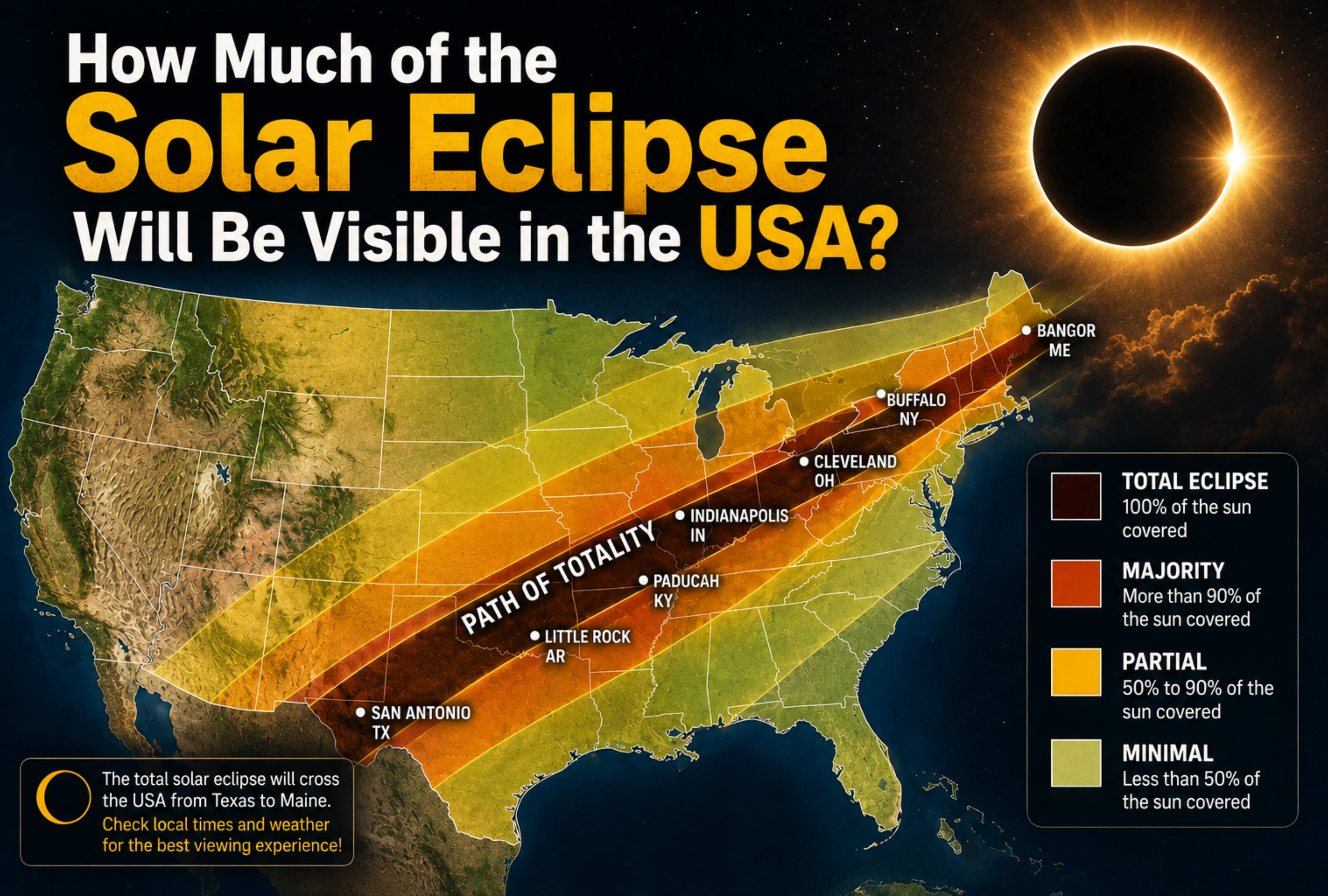
City-by-city coverage percentages for the August 12 solar eclipse in the United States. Check how much of the sun will be obscured in major metropolitan areas during maximum alignment. | Referencial image created by Depor using Chat GPT AI / GEC
FAQ: Solar Eclipse in the USA
Can I see a total solar eclipse in the United States on August 12, 2026?
No. The eclipse will be partial throughout the United States. Totality will be visible in Greenland, Iceland, Spain, and other areas along the eclipse path.
What is the best state to watch the August 12 solar eclipse?
Alaska is the best state for eclipse viewing in the U.S. Fairbanks is expected to see about 37% of the Sun covered, while Anchorage will see nearly 28%.
What is the best place to see the eclipse in the Lower 48 states?
Maine offers the best views in the contiguous United States. Bangor is expected to see around 24% coverage, followed by Augusta and Portland.
Will the solar eclipse be visible in New York City?
Yes, but only as a partial eclipse. New York City is expected to reach about 9% coverage at approximately 1:54 p.m. EDT.
Do I need eclipse glasses if the Sun is only partly covered?
Yes. Certified solar eclipse glasses are necessary throughout the event because the Sun will never be completely covered anywhere in the U.S. on August 12.
SOBRE EL AUTOR
Periodista y SEO del Grupo El Comercio con experiencia en investigación y coberturas de alto impacto para EE. UU., México y España. Mi expertise fusiona el análisis de actualidad con una especialización profunda en Deportes (F1, MLB, Boxeo, WWE, etc.), Tecnología y Gaming. Transformo datos en narrativa relevante para la audiencia hispana global.